Every June, a particular smell fills Japanese kitchens: green fruit and sugar, sharp and sweet at once. It’s the start of umeshigoto — the season of putting up ume. Ume rarely reaches American kitchens, so let me introduce it the way a Japanese home does: what it is, the one thing it’s famous for, and the jars I fill every year on my own small counter.
What is ume?
Ume is often translated as “Japanese plum,” though botanically it’s closer to an apricot (Prunus mume). It’s in season for only a few weeks in early summer, hard and green and mouth-puckeringly sour. You don’t eat it raw — unripe ume contains compounds that can be mildly toxic raw; curing or steeping makes it safe. So in Japan we don’t snack on ume; we preserve it. That single fact is the doorway into a whole small world of its own.
What is umeboshi?
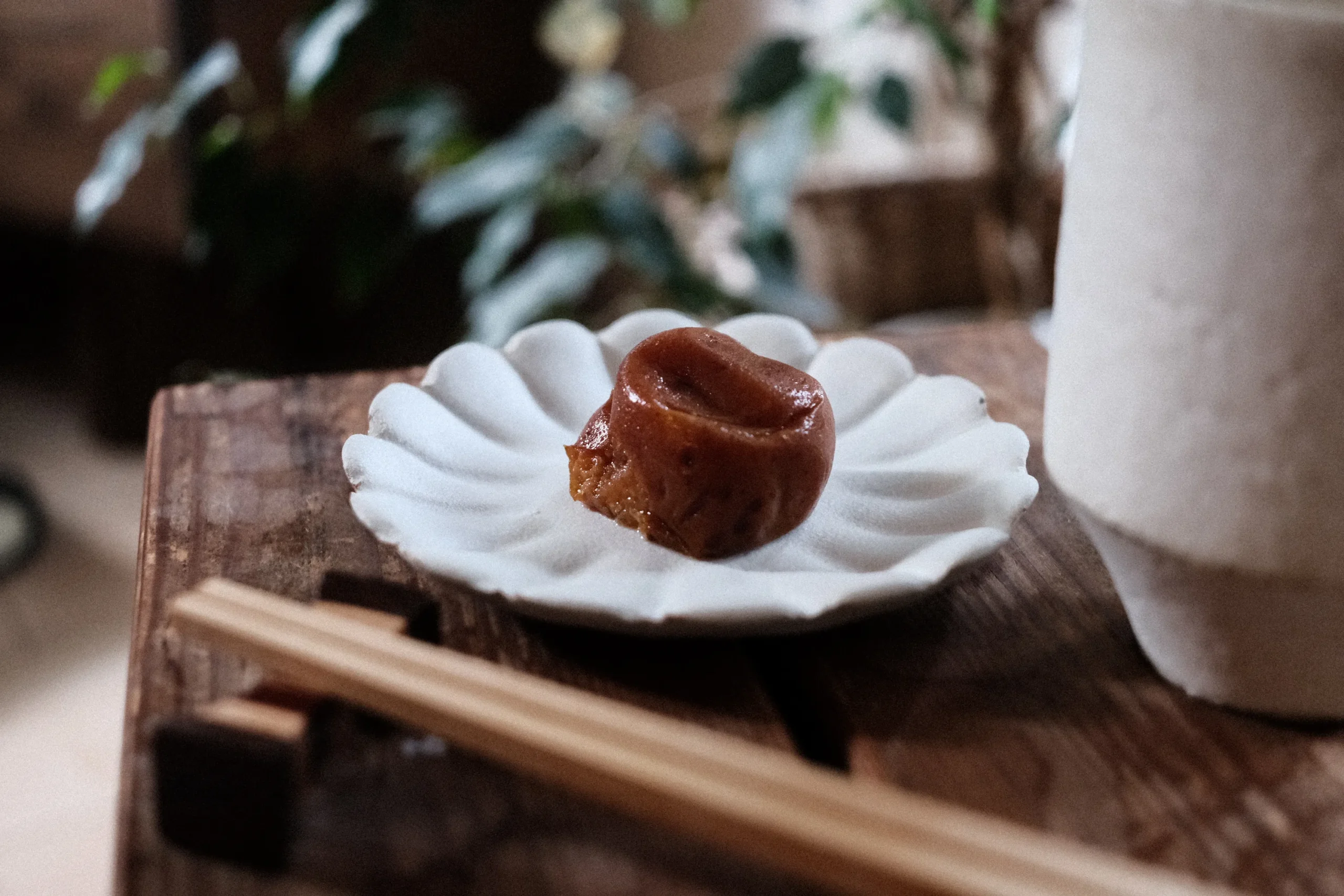
If ume is known abroad for one thing, it’s umeboshi — the Japanese pickled plum. The fruit is salt-pickled, usually with red shiso leaves, then dried in the summer sun. The result is intensely sour and salty, soft and wrinkled, a flavor that makes first-timers gasp and then, often, reach for a second.
We eat umeboshi in small amounts: one tucked into a bowl of rice, folded into an onigiri rice ball, or set right in the center of a boxed lunch of white rice — the hinomaru bento, named for its resemblance to the Japanese flag.
Why we preserve ume
That flag-in-a-lunchbox isn’t only decoration. For centuries, a single umeboshi was set on rice partly in the belief that it helped keep the rice from spoiling on warm days. Its acidity does have a mild antibacterial effect — at least on the rice it actually touches — even if one plum was never really enough to protect a whole lunchbox. In a country with hot, humid summers and, for most of its history, no refrigeration, that was quiet, practical wisdom.
Umeboshi has also long been treated as a kind of everyday home remedy. I’ll be careful here — this is food culture, not medical advice — but in Japan ume is traditionally reached for in the sticky heat of summer, when appetites fade, as something restorative and settling. Eating with the season, letting the year’s rhythm shape what’s on the table, is simply part of how many of us were raised.
And there’s the ritual itself. Umeshigoto is one of the small seasonal handcrafts that mark the Japanese year — like putting up preserves anywhere, it’s a way of catching a fleeting season and keeping a little of it in a jar.
Other ways we preserve ume — what I make
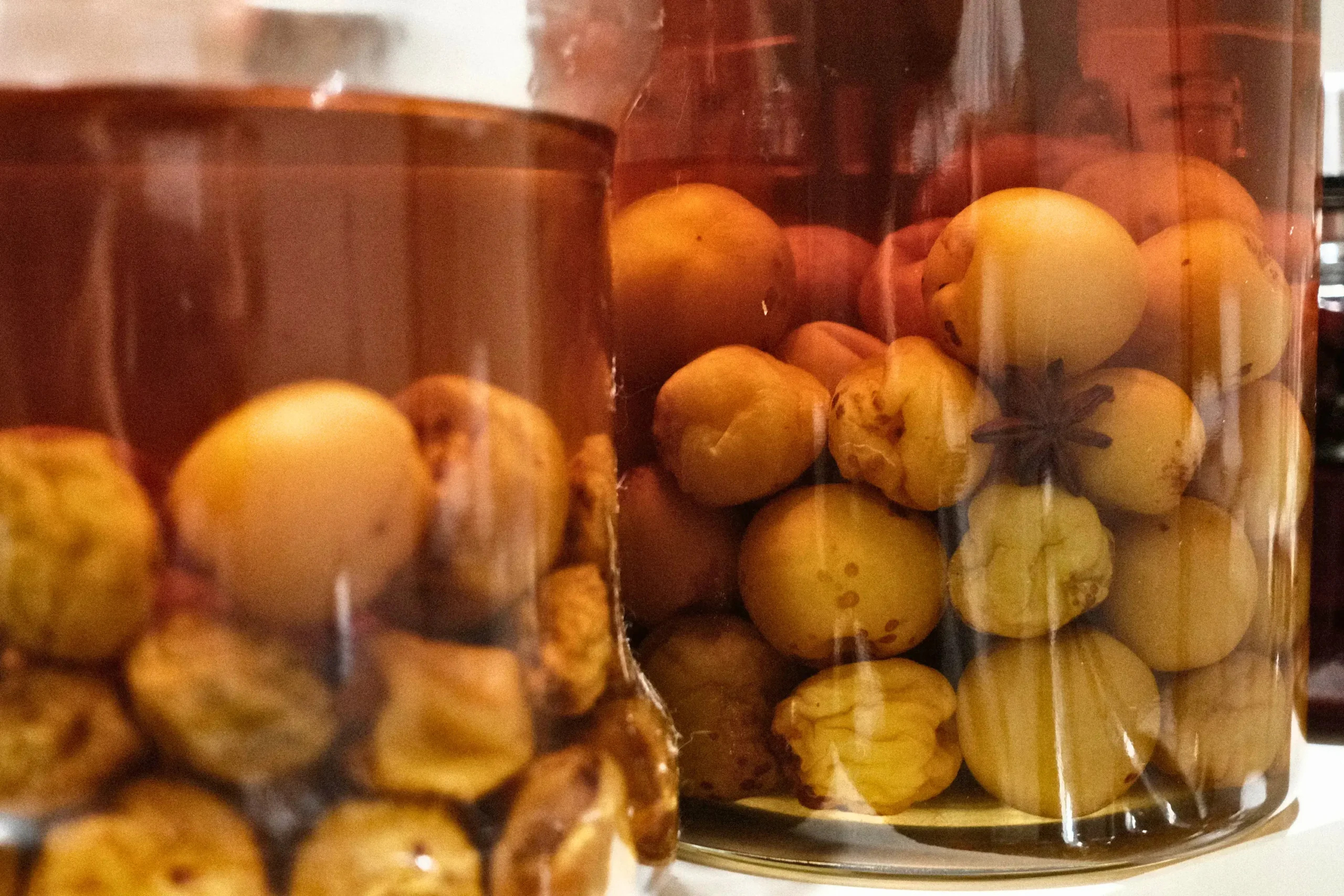
What I put up every year, without fail, is ume syrup and ume liqueur — umeshu, or plum wine.
There are a few reasons I keep at it. One is simply trust: syrup and umeshu I’ve steeped from raw fruit with my own hands have nothing added, so I know exactly what I’m drinking. Another is taste: making it myself, I can tune the sweetness exactly where I like it. And there’s that seasonal instinct again: a cool ume drink in the heat of summer feels like it sets me right again. But honestly, the biggest reason is the flavor. An essence drawn out slowly, over weeks, simply tastes better than anything quick.
When the harvest is generous, I make ume jam too. And just for fun, I’ve found the same idea works beyond ume — steep blueberries in something strong, like shochu (a Japanese distilled spirit) or whisky, and you get a lovely homemade fruit liqueur.
A quick note on how it works (and where to get the recipe)
The idea is almost embarrassingly simple: ume plus sugar, or ume plus a high-proof spirit, plus time. The fruit gives up its essence into the sugar or the alcohol, and after a month or more you have syrup or liqueur.
For exact amounts and steps, I follow Just One Cookbook’s ume syrup and umeshu guides — clear, tested, and written for Western kitchens. What I can add is the part a recipe usually leaves out: what actually goes right and wrong.
What I’ve learned
I prefer fully ripened ume — it gives a rounder, sweeter result with more depth. The trouble is that ripe fruit is temperamental: sometimes the flesh collapses instead of yielding that clear, jewel-like essence, and if it’s over-ripe, it can grow mold while it steeps. Green ume is more forgiving; ripe ume is the gamble I keep taking.
For sugar, I usually use rock sugar (kori-zato), which dissolves slowly and evenly. I’m always tempted to blend in a little brown sugar, kibi sugar (unrefined cane sugar), or beet sugar for a deeper flavor — and it is delicious — but those don’t always dissolve cleanly, and I’ve ended up with grit at the bottom of the jar more than once. It’s a small trade-off between depth and tidiness, and I still haven’t fully settled it.
How we enjoy it, all year
The syrup I drink diluted — with cold water, or, my favorite, topped up with sparkling water. On a punishing summer afternoon, an ice-cold ume soda is exactly what a dry throat is asking for.
The umeshu I take on the rocks, with dinner — the way the slightly syrupy liqueur clings to the ice as it chills is a genuine, small luxury. The jam I fold into pancake batter, spread on toast, stir through yogurt, and sometimes use as a condiment in cooking; it’s surprisingly versatile.
Why I keep doing it
There’s a waiting built into all of this — you fill the jar in June and you don’t hurry it. But that’s the charm. One early-summer afternoon of work becomes a whole year of slow enjoyment, opened a glass at a time.
And I think it’s the handwork itself I keep coming back to. Ume has been valued in Japan for a very long time as something quietly restorative, and preparing it by hand each year has a way of pulling me back toward a more careful, more deliberate kind of living. That’s reason enough to keep going — and I expect I always will.
Sources & further reading

Yasuko
It began with food — I trained as a natural-food coordinator before my current work as a photographer and web designer in Japan. I write about the everyday Japanese tools I keep and use at home, with seven rescued cats never far away.
One quiet note a month
New tools, seasonal handwork, and the cats — a short letter when there’s something worth sharing. No noise.
Unsubscribe anytime. Roughly once a month.