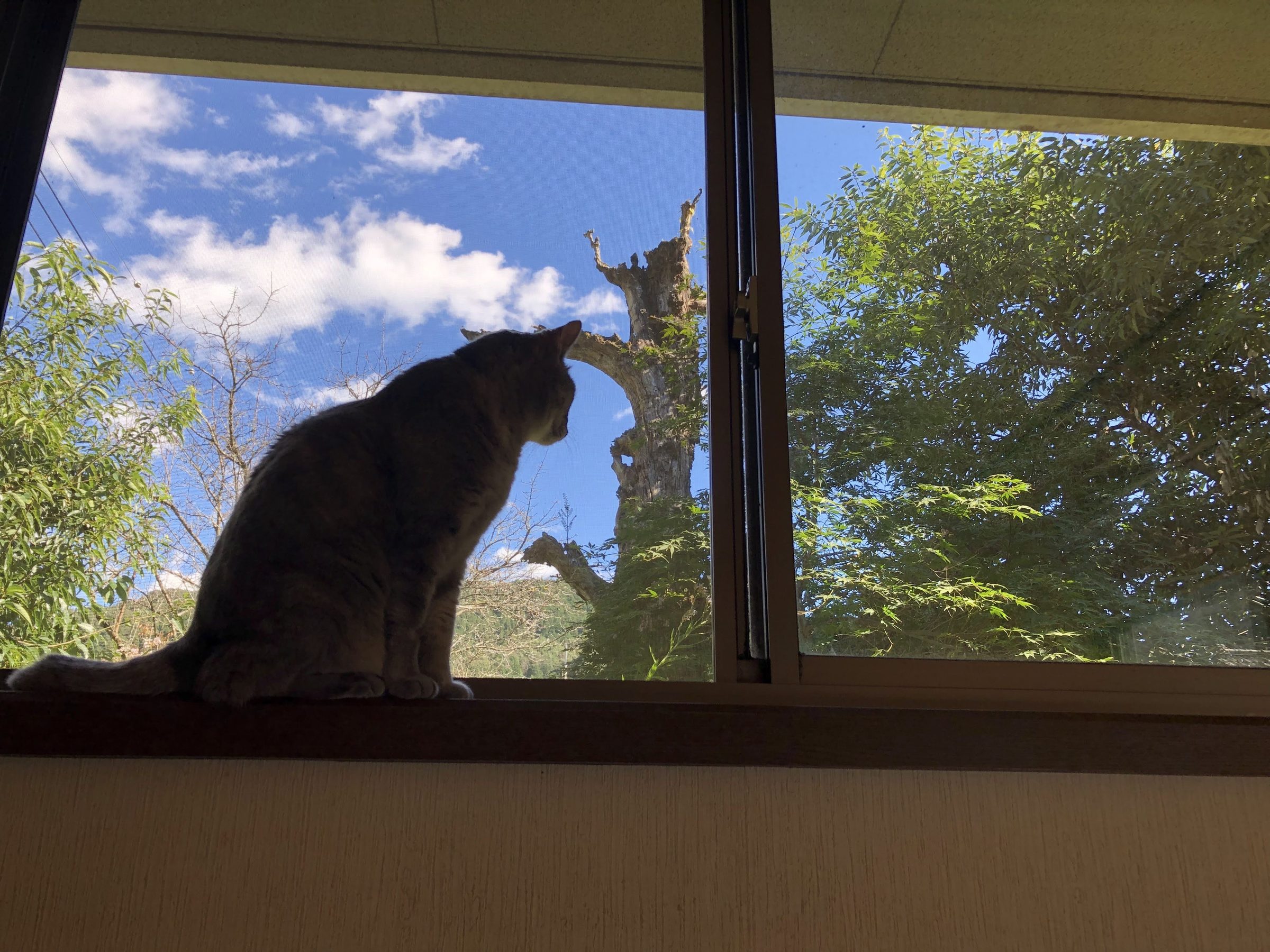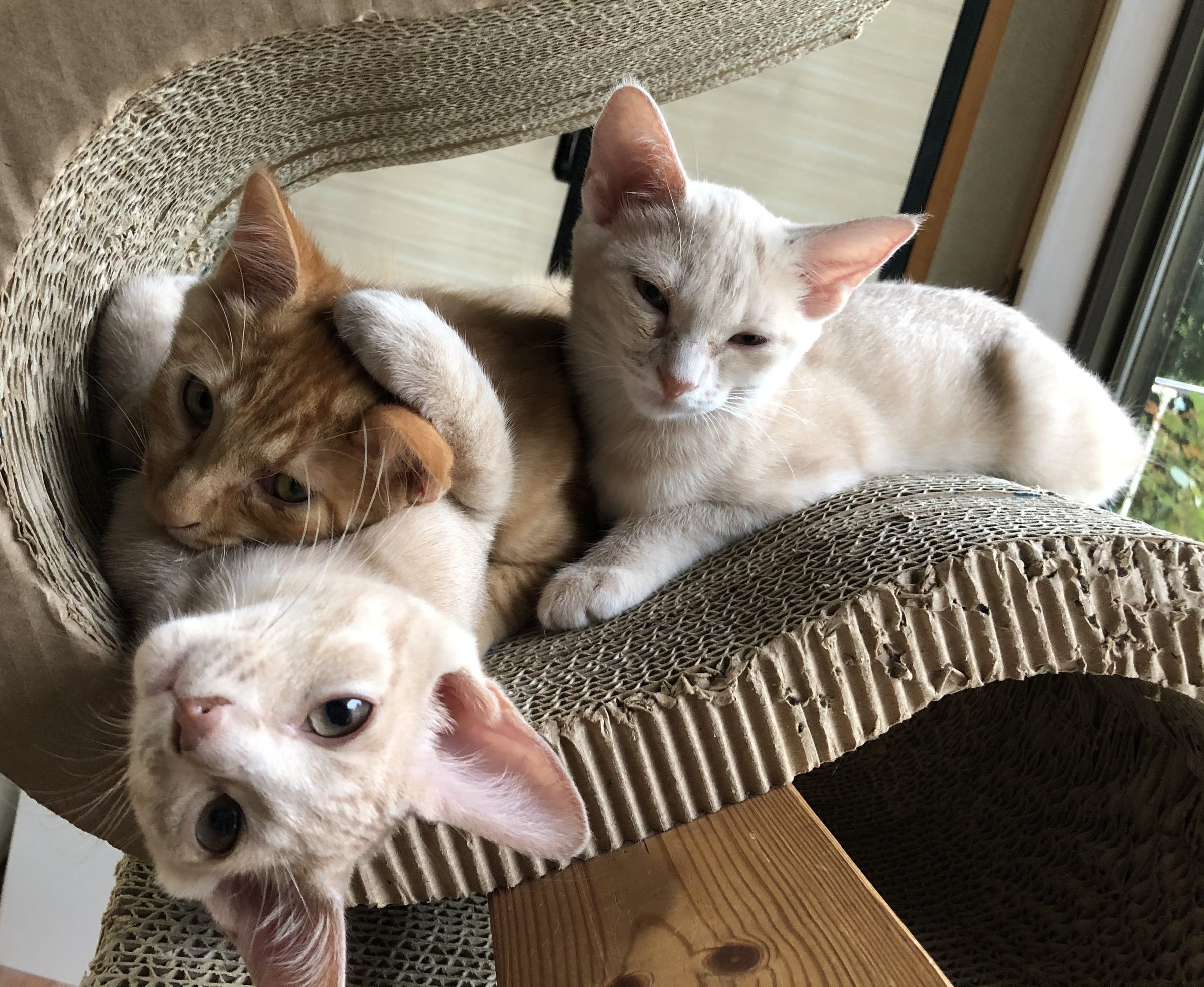
All seven of the cats I live with are rescues. That wasn’t a plan; it happened one cat at a time, the way it tends to. But living with Japanese rescue cats has made me pay attention to something most visitors to Japan never see — the quiet, decades-long effort to stop killing cats in this country, and how much of it is still unfinished. If you love Japan, this is part of it too.
The numbers, and how far they’ve fallen
Here is the figure that matters first, because it is genuinely good news. In fiscal 2023, according to Japan’s Ministry of the Environment, the country euthanized about 6,900 cats in its public shelters — roughly nineteen a day. Together with dogs, the total was around 9,000 animals, the lowest since records began.
To feel how far that is, look back. In 2012 the figure for cats alone was over 123,000. Two decades ago it was higher still — well past 200,000 in a single year. Whichever year you start from, the fall is on the order of ninety-five percent. This is one of the quiet successes of modern Japan, and almost no one outside the country knows it happened.
Why it’s mostly cats, and mostly kittens
Far more cats are put down than dogs — more than three times as many — and, this is the hard part, around sixty percent of them are kittens. The reason is simple. One unspayed female cat, left to the outdoors, can lead to something like twenty kittens in a single year once her daughters begin having litters of their own. Nothing about adoption can keep pace with a number that doubles and doubles again.
So most rescue cats aren’t surrendered house pets — they’re kittens born outdoors to stray cats no one has spayed.
Why the number never quite reaches zero
If the cause is that clear, why hasn’t Japan finished the job? A few reasons, tangled together.
- An old habit that lingers. Far fewer people let their cats roam outdoors than once did, but the idea hasn’t disappeared entirely — and an outdoor cat that isn’t spayed is a litter waiting to happen.
- Cats being let go. When circumstances change, cats and kittens are still given up. Many households took in a cat or a dog during the work-from-home years; now that commuting is part of daily life again, keeping up with that care isn’t always easy, and some pets are let go too readily. How much this shows in the national numbers isn’t yet clear — but it’s a worry you hear often here.
- Multi-cat household collapse (tatō-shiiku hōkai). A few unsterilized cats in one home become dozens within a couple of years, until the household breaks down and the cats are surrendered all at once. It is one of the most common rescue emergencies in Japan today.
- Aging owners. In a country growing older, elderly people sometimes outlive their ability to care for a long-loved cat, and have no one to pass it to.
How Japan is turning it around
The ninety-five-percent drop didn’t come from any single thing. It came from a lot of unglamorous, persistent work.
TNR — trap, neuter, return. Volunteers trap free-roaming cats, have them spayed or neutered, and return them to where they live (you can spot a returned cat by the small notch clipped in one ear — often called a “sakura ear” here). It doesn’t remove the cats already living outside, but it stops the next generation, which is the only thing that actually brings the numbers down.

Community cats (chiiki neko). Whole neighborhoods take shared responsibility for the outdoor cats among them — feeding on a schedule, cleaning up, and getting every cat fixed, often with a municipal spay-and-neuter subsidy. Managed this way, a colony shrinks quietly, on its own, over years.
Rescue groups and adoption events. A large network of shelters and volunteer groups pulls cats out of collapse cases and off the streets, fosters them, and rehomes them through adoption events (jōto-kai) and, increasingly, social media.
The law caught up, too. A 2013 change let shelters refuse animals surrendered without good reason, and a 2019 amendment made microchipping mandatory for cats and dogs sold by breeders and shops — a step toward the day when every cat can be traced back to a person responsible for it.
Where rescued cats come from — and how ours found us
Put all of that together and you can see where a Japanese rescue cat usually begins: a stray kitten no one claimed, a cat left behind, a colony being wound down, a household that fell apart, an owner who could no longer cope.
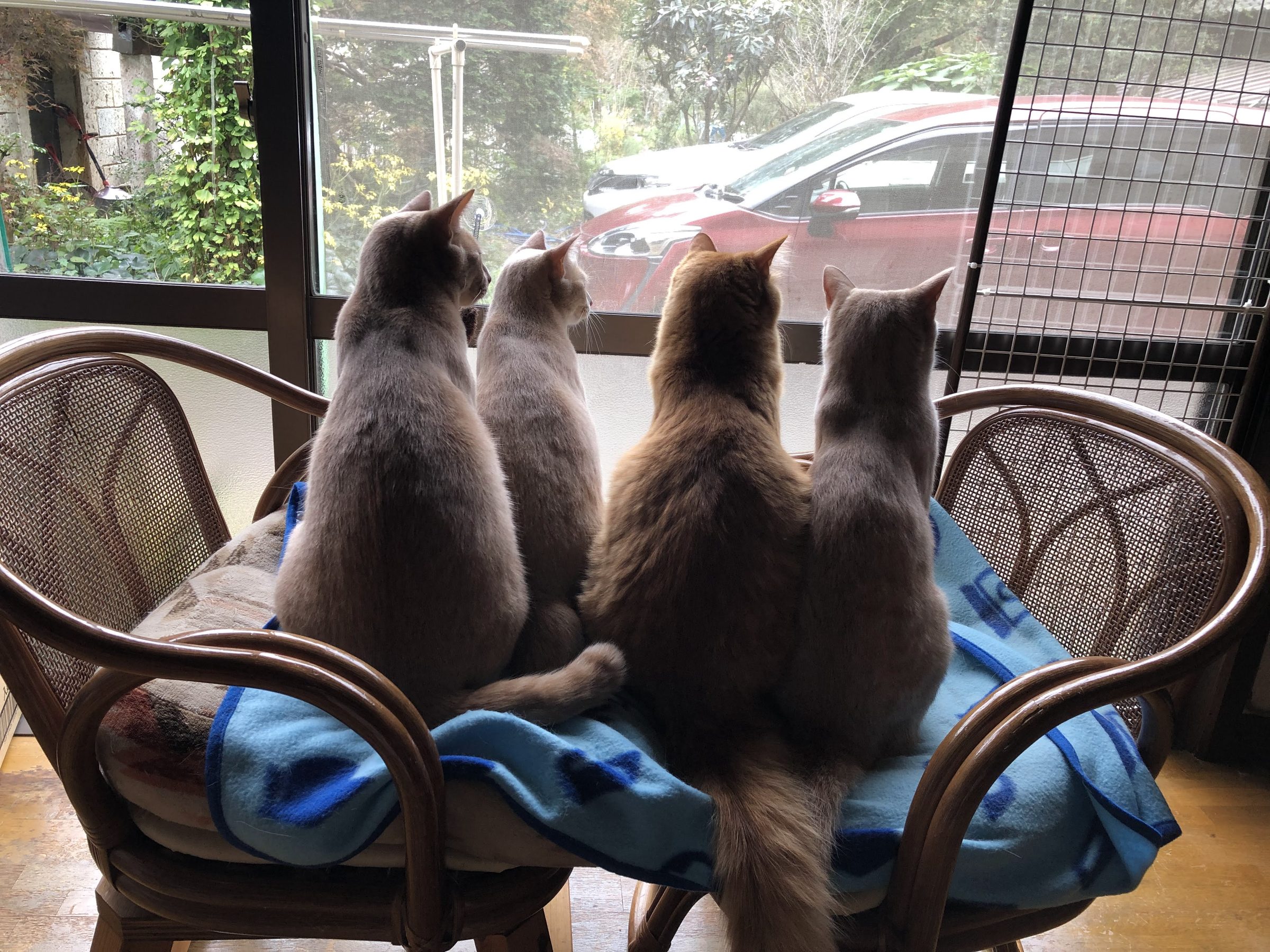
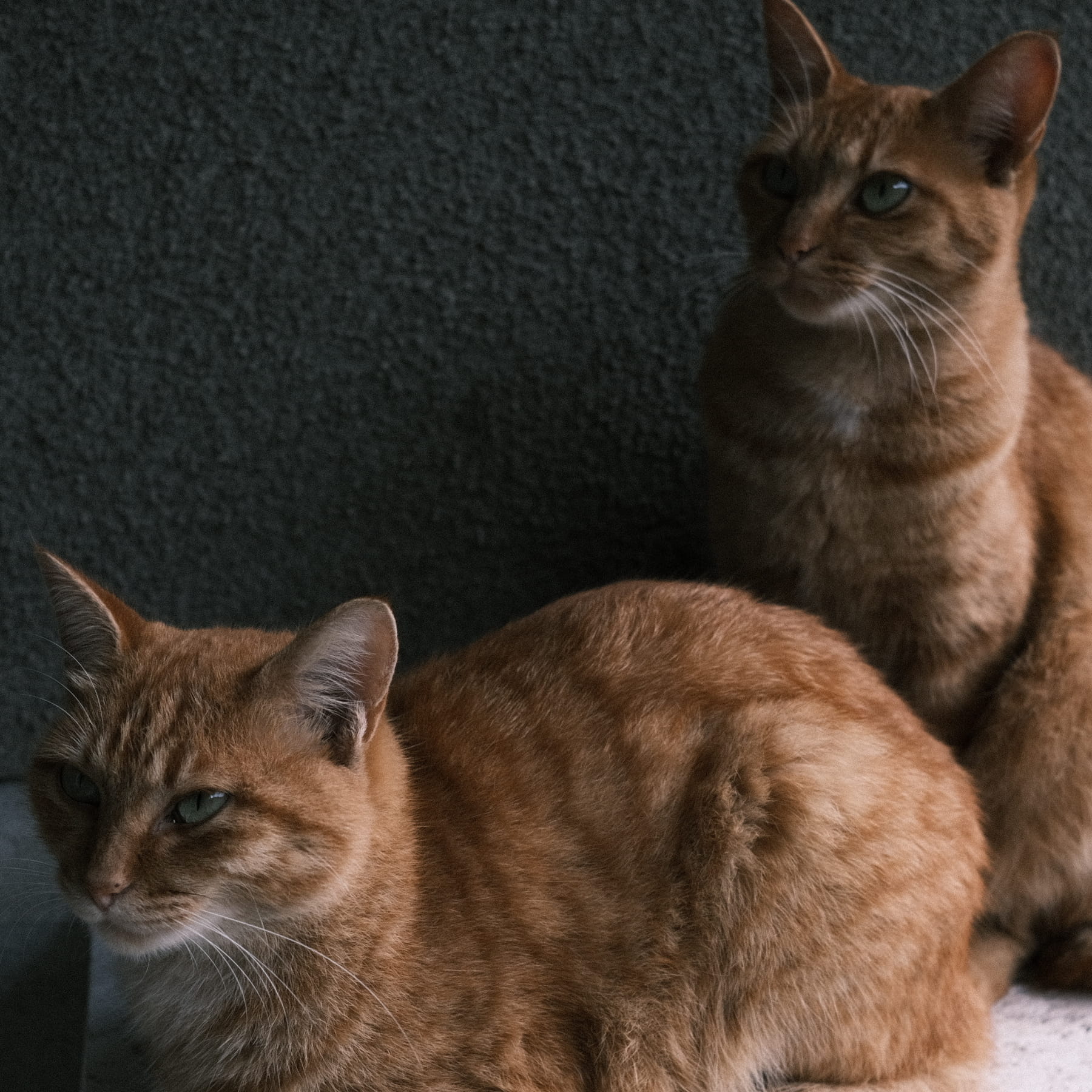
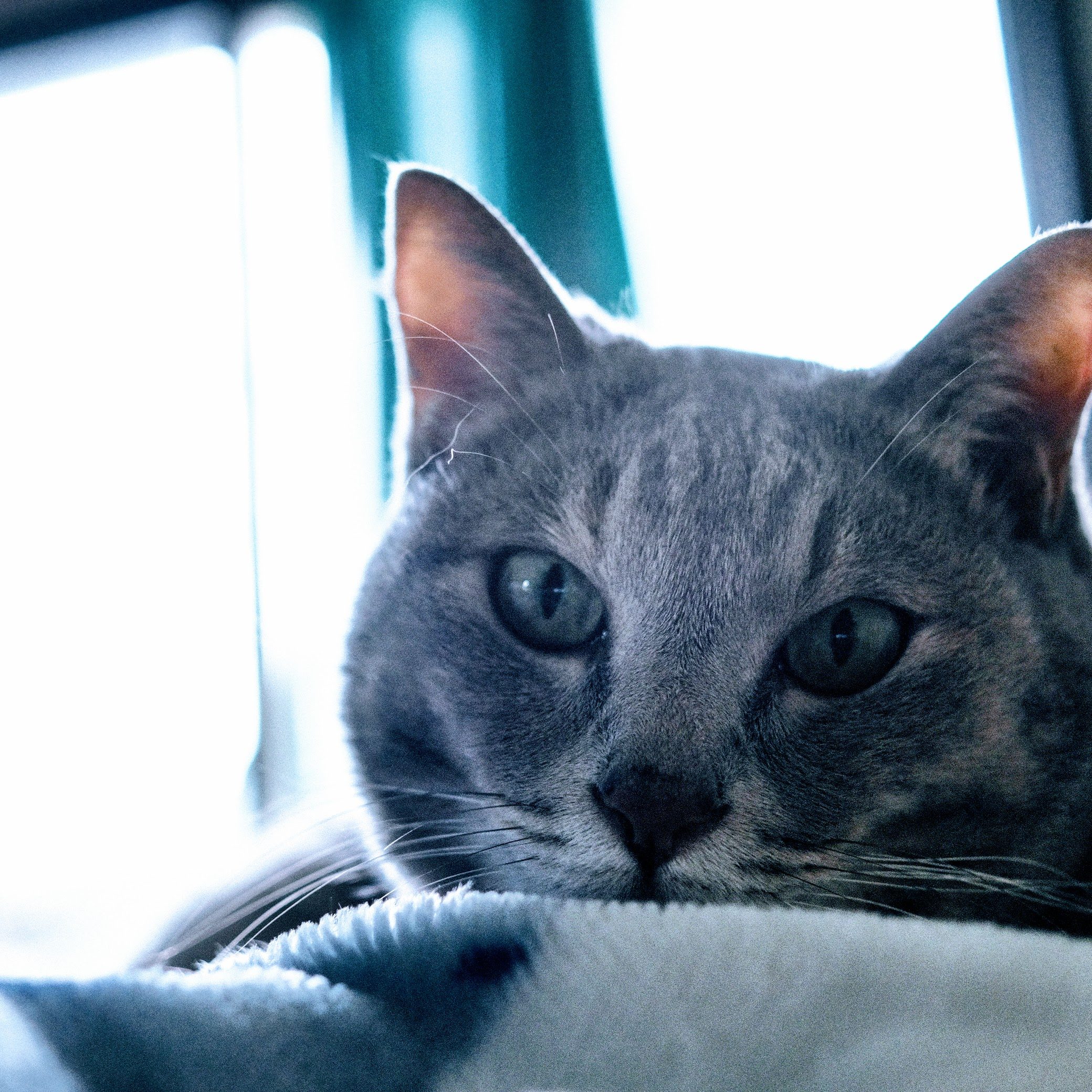
Some of our seven likely came to us along these very paths. Guri and Gura came to us as former strays. Kibo, whom we lost in the spring, was a brown tabby who had come in from the streets as well. Each of them simply needed a place, and that place was our home.
I don’t tell this to make a point of it. I tell it because a home shaped around cats who needed one has its own particular warmth — and because the slower life I write about here is built, quite literally, around them.
If you’re reading from outside Japan
You don’t have to be in Japan to be part of this. A few simple choices help anywhere: adopt when you can, keep cats from breeding unintentionally — spay or neuter any cat you’re not intentionally breeding — and support the volunteers and groups doing the trapping and fostering. Japan’s numbers fell because ordinary people decided to change them, one cat at a time — and that part translates anywhere.

Yasuko
I trained first as a natural-food coordinator; these days I work as a photographer and web designer in Japan. I write about a slower life — everyday Japanese tools, seasonal handwork, and the seven rescued cats who share it.
One quiet note a month
The cats, the tools, seasonal handwork — a short letter when there’s something worth sharing. No noise.
Unsubscribe anytime. Roughly once a month.